
10 de Febrero
La Pila neighborhood, Comitán de Domínguez
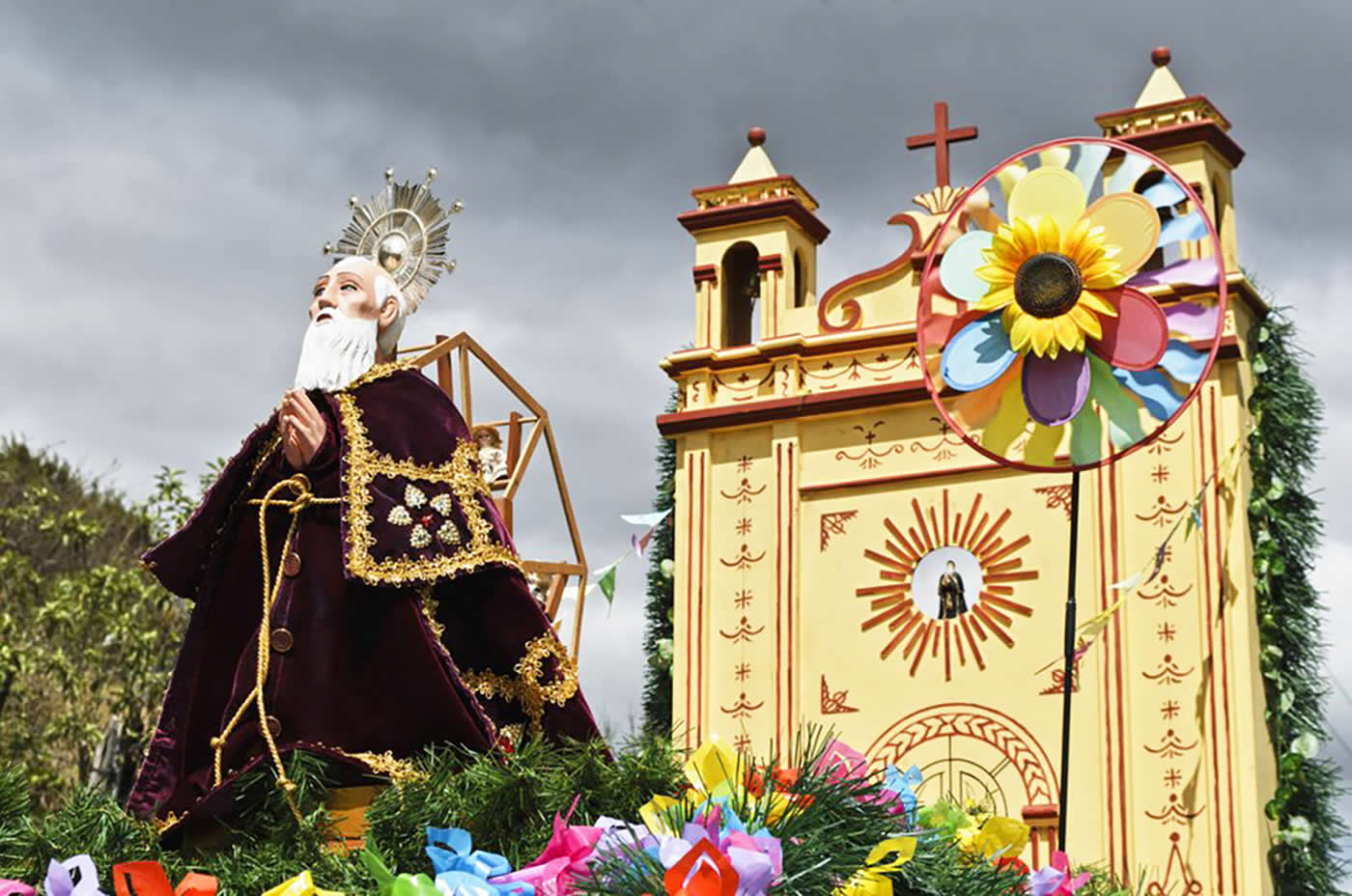
The Feast of San Caralampio is one of the most emblematic religious celebrations in Comitán de Domínguez. Devotion to the martyr dates back to the mid-19th century, when his image arrived and began to be venerated as a protector during epidemics. After being credited with intercession during times of plague, a temple was built in his honor, now one of the city’s principal spiritual and cultural landmarks.
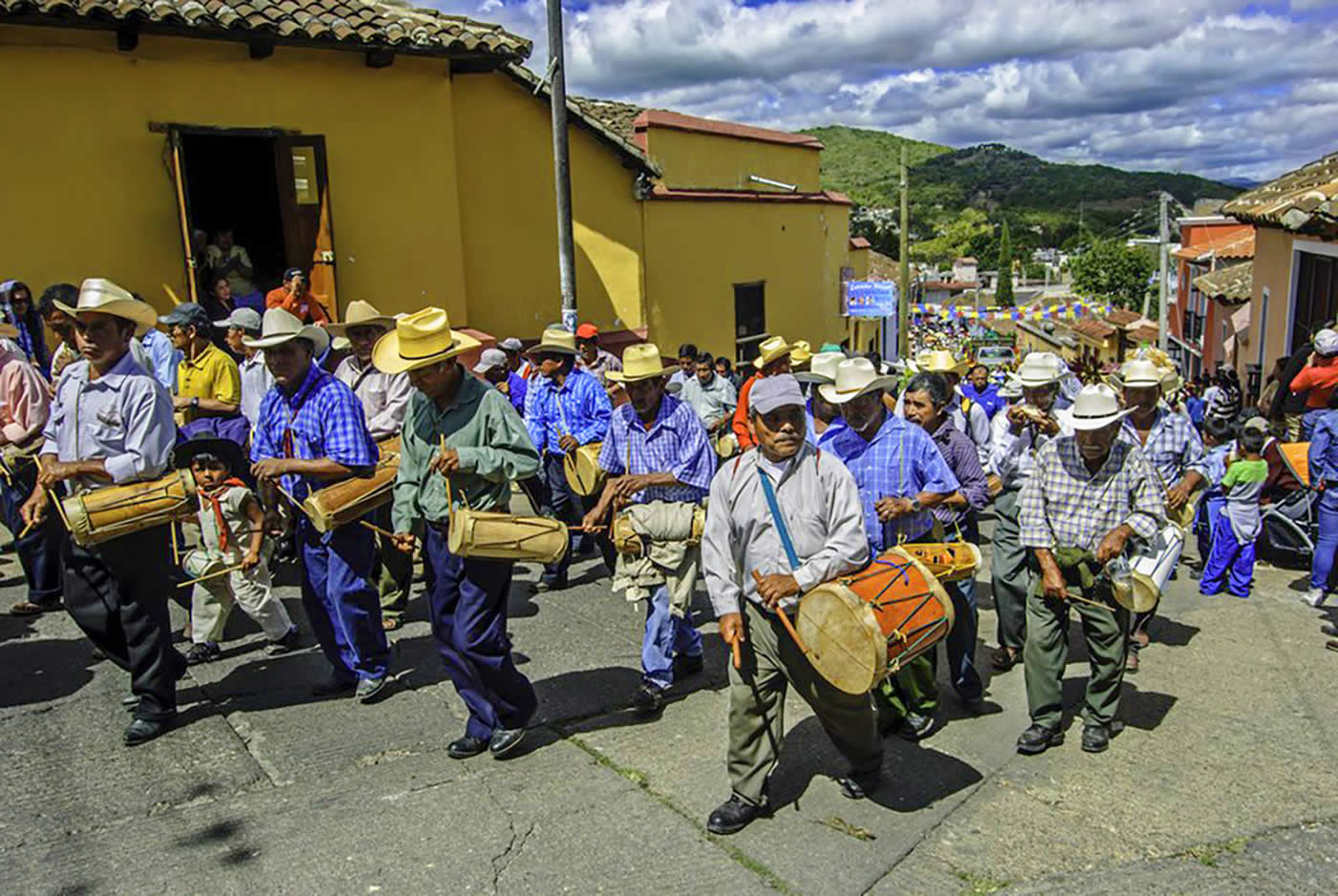
The main celebration takes place on February 10th with a traditional pilgrimage to the temple. From El Chumís, faithful from Comitán and nearby communities gather to participate in this expression of faith marked by vibrant cultural elements.
The Floral Offering is one of the most colorful in the region. Groups of devils, giants, comanches, and masked characters dance before the temple, accompanied by drums, reed flutes, marimbas, bells, and fireworks. Pilgrims present their floral offerings and participate in liturgical acts, preserving a tradition passed down through generations.
Before the festivities begin, the traditional “muda” takes place, changing the saint’s garments for the year. The novena begins on February 12th, with nightly floral offerings organized by Tojolabal communities, highlighting the multicultural character of the celebration.
The festivity is further enriched by the celebration of Our Lady of Lourdes, whose novena begins on February 2nd, with February 11th as her main feast day.
The Feast of San Caralampio represents one of the most significant expressions of Comitán’s religious and cultural heritage, offering a unique experience for residents and visitors alike.
The main celebration takes place on February 10th with a traditional pilgrimage to the temple. From El Chumís, faithful from Comitán and nearby communities gather to participate in this expression of faith marked by vibrant cultural elements.
The Floral Offering is one of the most colorful in the region. Groups of devils, giants, comanches, and masked characters dance before the temple, accompanied by drums, reed flutes, marimbas, bells, and fireworks. Pilgrims present their floral offerings and participate in liturgical acts, preserving a tradition passed down through generations.
Before the festivities begin, the traditional “muda” takes place, changing the saint’s garments for the year. The novena begins on February 12th, with nightly floral offerings organized by Tojolabal communities, highlighting the multicultural character of the celebration.
The festivity is further enriched by the celebration of Our Lady of Lourdes, whose novena begins on February 2nd, with February 11th as her main feast day.
The Feast of San Caralampio represents one of the most significant expressions of Comitán’s religious and cultural heritage, offering a unique experience for residents and visitors alike.